Wednesday, August 28, 2019

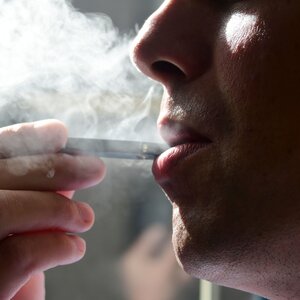
People are vaping THC. Lung injuries being reported nationwide. Why is the CDC staying quiet?

Check out this article from Detroit Free Press:

https://www.usatoday.com/story/news/health/2019/08/28/critics-cdc-silent-vaping-thc-injuries-mount/2121523001/

Federal health officials are under fire for their unclear public warnings after one death and nearly 200 cases of vaping-related lung illnesses, which some say are related to the far riskier practice of vaping marijuana oil rather than nicotine. 


Some state health department and news reports suggest many of the cases of lung problems involve tetrahydrocannabinol, known as THC, the chemical in marijuana that causes psychological effects.

ABC 20/20 August 27, 2019

https://youtu.be/oXkKFLPbOxo

Two teens say they almost died from vaping!

Why has Health Canada not taken action to block their sales?

Tuesday, August 27, 2019

North Carolina is suing 8 e-cigarette companies

https://www.npr.org/2019/08/27/754717176/north-carolina-says-it-is-suing-8-e-cigarette-companies

North Carolina is suing electronic cigarette companies that it accuses of selling products to children, amid a major increase in U.S. teens getting hooked on vaping.
The state's attorney general, Josh Stein, announced Tuesday that his office will be filing lawsuits in state court against eight companies that sell vaping products. His office is accusing these companies of "aggressively targeting children and do not require appropriate age verification when selling these dangerous and addictive products."
North Carolina law prohibits the sale of e-cigarette products to those younger than 18.
Earlier this year, Stein filed a similar lawsuit against the popular e-cigarette company Juul.
"Our complaints allege that these eight e-cig companies are helping to fuel an epidemic of vaping among high school and middle school students," Stein said in a statement. "One look at their marketing materials demonstrates just how egregious their sales tactics are — with flavors like cotton candy, gummy bear, unicorn, and graham cracker, they're clearly targeting young people."
The companies targeted by the lawsuits are Beard Vape, Direct eLiquid, Electric Lotus, Electric Tobacconist, Eonsmoke, Juice Man, Tinted Brew and VapeCo. Most of the companies did not immediately responded to NPR's request for comment.
"We absolutely affirm that these products don't belong in the hands of children," Bruce Gibson, the CEO of The Electric Tobacconist, said in a statement. "As such we have an extensive age verification platform that means a purchase can't be completed until a person's age has been established through a third party platform."
"To teenagers, the health and addiction risks of vaping are simply too high," Stein said. "That is why my office is asking the court to protect our kids by shutting down these operations in our state."
In the lawsuit against Juul, filed in May, Stein's office asked a court to block the company from selling e-cigarette products to minors in North Carolina and not allow the company to sell any flavors online other than tobacco or menthol.
Many e-cigarette companies have said their products help cigarette smokers to quit. But there's also vast evidence that many young people who have never smoked are vaping.
"While tobacco use among teens dropped from 28 percent to just above 5 percent from 2000 to 2017, the rise of e-cigarettes has led the number of high schoolers using tobacco products back up to nearly 30 percent and 7 percent among middle schoolers," Stein's office said.
The Food and Drug Administration has warned that teen vaping in the U.S. has reached "an epidemic proportion" and is trying to reduce the sales and marketing of the devices to teens.
Many e-cigarettes contain nicotine, the addictive chemical found in cigarettes.
According to the U.S. Surgeon General, nicotine is particularly dangerous to young people. "Nicotine exposure during adolescence and young adulthood can cause addiction and harm the developing brain," it said. Last year, 20% of high school students said they had used e-cigarettes in the past month.
San Francisco officials recently voted to ban the sale and distribution of e-cigarettes in that city.

Advertising restrictions needed to curb vaping among youth, researchers say

https://www.cbc.ca/news/health/e-cigarette-advertising-1.5260652

As the popularity of e-cigarettes among Canadian teens surged, advertisements in stores and on TV contributed to their popularity, and now need to be regulated, researchers say.

In a study published on Monday in the journal Pediatrics, researchers at the University of Texas found children aged 12 to 17 who reported remembering e-cigarette marketing in stores, such as on signs, were nearly twice as likely to start vaping within two and a half years.

The researchers also followed 2,288 youths (aged 12 to 17) and 2,423 young adults (aged 18 to 29) who said they'd never vaped.

Among young adults who recalled both in-store and TV ads, the likelihood they would take up vaping increased by 30 per cent for both forms of marketing, lead author Alexandra Loukas and her team found.

Public health experts and others warned governments that allowing e-cigarette advertising would lead to an uptick among youth and young adults, says Robert Schwartz of the Dalla Lana School of Public Health at the University of Toronto who is currently conducting similar research to Lousas's.

What exactly in your vape? Health Canada plans to find out

https://montrealgazette.com/news/local-news/what-exactly-is-in-your-vape-health-canada-plans-to-find-out

"Vaping is a bit of an act of faith. We can procure e-liquids from someplace dodgy or order them online without really knowing what's in them."


Health Canada is preparing to launch a wave of inspections of businesses selling vaping products. They will analyze products to determine their contents and nicotine levels.
Though the health ministry will not confirm the information, the Presse Canadienne has learned that 22 inspectors will be assigned to the operation.
In an email to the Presse Canadienne, Health Canada did confirm that “between now and the end of 2019, inspectors will be visiting 3,000 retailers of vaping products (specialized stores and convenience stores) in order to check conformity” with the Tobacco and Vaping Act and the Canadian Consumer Product Safety Act.
The ministry added that its inspectors will examine “all products on sale in the establishment” and that “the non-respect of one or several articles of the law could have serious consequences, such as the seizure of products or financial sanctions.”
Vaping liquids — also known as e-liquids — contain glycerol or propylene glycol that are used to dilute nicotine, as well as diacetyl, which is used to produce flavour. While the products do present toxicity risks, they are believed to be less serious than those of tobacco. There is little research into the long-term effects of vaping.
Mathieu Valke, a toxicologist with the Institut national de santé publique du Québec, notes that there is another risk that should be considered when the products are being consumed: “The problem is that there isn’t too much regulation over the content of these liquids, so we don’t really know what’s in them.”
Health Canada says the Tobacco Products Labelling Regulations, which extend to vaping products, requires that “labels on all vaping products must include a list of ingredients. Furthermore, vaping products that contain nicotine must have a standard label displaying the concentration of nicotine and a warning concerning the risk of addiction associated with nicotine.”
“Vaping is a bit of an act of faith,” said Dr. Mathieu Morissette, a researcher at the Institut universitaire de cardiologie et de pneumologie de Québec, which is affiliated with Laval University. “We can procure e-liquids from someplace dodgy or order them online without really knowing what’s in them. Not everyone has a biochemistry lab at home to analyze the contents.”
Morissette notes that product labels can be deceiving. He cites studies where e-cigarettes were purchased at random in various convenience stores and while all of them were labelled as nicotine-free, half of them were found to contain nicotine.
All of which explains why Health Canada wants to take a closer look on a very large scale, targeting 1,000 specialized stores and 2,000 dépanneurs. Even though that’s a small fraction of the total number of vaping outlets, the task will be daunting with only 22 inspectors.
“With the quantity of liquids, of vape shops that exist, the liquids we can buy online, it’s almost impossible to control,” Morissette said.
Health authorities are concerned about the growing popularity of vaping — particularly among young people who are otherwise non-smokers — because of the nicotine addiction it can create.
However, a ban seems unlikely because a crushing majority of users — 85 per cent, according to the most recent survey by the Institut national de santé publique du Québec — are e-smoking to stop using tobacco.

Friday, August 23, 2019

What we know about the illness that might be linked to vaping

https://www.ctvnews.ca/health/what-we-know-about-the-illness-that-might-be-linked-to-vaping-1.4563421

Health officials in the U.S. have confirmed a patient has died after contracting a serious lung disease that may be linked to vaping.
The death in Illinois could be the first in the country linked to electronic cigarettes.
"The severity of illness people are experiencing is alarming and we must get the word out that using e-cigarettes and vaping can be dangerous," Illinois Department of Public Health director Dr. Ngozi Ezike said in a press release.
In the U.S., officials with the Centers for Disease Control and Prevention have said 193 people in 22 states have contracted the severe respiratory illnesses.
WHAT ARE THE SYMPTOMS?
Doctors in the U.S. have said the illness resembles an inhalation injury, with the lungs apparently reacting to a caustic substance. Some U.S. patients have likened onset of the illness to a heart attack and others to the flu. Symptoms have included shortness of breath, fatigue, chest pain and vomiting.
Vaping even a single e-cigarette can damage a person’s blood vessels, according to a recent small-scale U.S. study published in the journal Radiology.
“We've shown that vaping has a sudden, immediate effect on the body's vascular function," the study’s author, Felix Wehrli, a radiologic science and biophysics professor at the University of Pennsylvania, said in a statement.
“While e-cigarette liquid may be relatively harmless, the vaporization process can transform the molecules -- primarily propylene glycol and glycerol -- into toxic substances," he explained, also highlighting the addictive, harmful effects of nicotine.
It’s unclear what is causing the harmful blood vessel damage because Wehrli’s team couldn’t determine if it was due to the aerosol, the artificial flavours or if it’s because of what happens to the e-cigarette chemicals when they’re heated.
HEALTH CANADA’S RESPONSE
Health Canada says it “does not have evidence of clusters of pulmonary disease cases related to vaping in Canada similar to those reported in the United States.”
“We will continue to carefully monitor the situation as more information becomes available and will take action if warranted,” the agency said in a statement.
Chief Public Health Officer Dr. Theresa Tam has contacted her provincial and territorial counterparts so that any similar illnesses potentially linked to vaping are reported federally as quickly as possible.
Between January 2015 and August 2019, Health Canada received reports of 14 adverse health effects related to e-cigarettes. 
These included breathing difficulties, elevated blood pressure, a mini stroke and reports of irritation or allergic reactions. Other reports involved issues including mouth burning and dizziness.
CANADIAN VAPING
Vaping has seen a rapid rise in Canada, particularly among young people.
A study from June revealed a massive 74 per cent jump in youth vaping in Canada from 2017 to 2018.
Take-up of vaping by teens aged 16 to 19 jumped from 8.4 per cent to 14.6 per cent, a 74 per cent increase over the year, according to the study published by the British Medical Journal.
The report was led by Prof. David Hammond of the University of Waterloo in Ontario.
“The vaping market in North America has evolved rapidly over the past two years owing to the growth of JUUL e-cigarettes and similar products,” the authors wrote.
“JUUL uses benzoic acid and nicotine salt technology to deliver higher concentrations of nicotine than conventional e-cigarettes. News reports and social media analyses suggest that both the marketing and discreet product design of JUUL are particularly appealing to young people.”
In Canada in 2017, 4.6 million people aged 15 and older said they had tried e-cigarettes, with around 292,000 smoking them daily, according to the University of Waterloo.
Canada’s Tobacco and Vaping Products Act came into effect in May 2018 allowing adults to legally access vaping products with nicotine, though unregulated vaping products have been available for more than a decade, the government admits.
The Canadian Cancer Society has called for immediate government action to address the “significant and troubling increase” in youth vaping and is urging provinces to increase the minimum age for the sale of tobacco and vaping products to 21.
“This is an epidemic. This will have serious health consequences and we need to act and need leadership to stop what’s happening,” said Dr Erika Penz, professor of respirology at the University of Saskatchewan.
---- With files from CTV National News medical specialist Avis Favaro, Jeremiah Rodriguez and The Associated Press


First death blamed on vaping

https://apnews.com/b05de1dd26a54ae88de4d77eb7b41e6f?utm_medium=AP&utm_campaign=SocialFlow&utm_source=Twitter

CHICAGO (AP) — Health officials said Friday that an Illinois patient who contracted a serious lung disease after vaping has died and that they consider it the first death in the United States linked to the smoking alternative that has become popular with teens and young adults.
The Illinois Department of Public Health the adult patient was hospitalized after falling ill following vaping, though it didn’t give other information about the person, including the patient’s name, age, hometown or date of death.
The state received the report of the death Thursday, said Dr. Jennifer Layden, the Illinois agency’s chief medical officer.
Officials with the Centers for Disease Control and Prevention said Friday that 193 people in 22 states have contracted severe respiratory illnesses after vaping. However, they said a clear-cut common cause of the illnesses hasn’t been identified and that they are being called “potential cases” that are still under investigation.
All of the sickened have been teens or adults who had used an electronic cigarette or some other kind of vaping device. Doctors say the illnesses resemble an inhalation injury, with the lungs apparently reacting to a caustic substance. So far, infectious diseases have been ruled out.
The illnesses have been reported since late June, but the total count has risen quickly in the past week. That may be partly because cases that weren’t initially being linked to vaping have begun to be grouped that way.
Among the newest reports are two in Connecticut, four in Iowa and six in Ohio. Health officials are asking doctors and hospitals to tell state health officials about any possible vaping-related lung disease cases they encounter.
In its news release, the Illinois agency said the number of people who contracted a respiratory illness after vaping had doubled in the past week, to 22.
“The severity of illness people are experiencing is alarming and we must get the word out that using e-cigarettes and vaping can be dangerous,” IDPH Director Dr. Ngozi Ezike said in the release.
Electronic cigarettes have been described as a less dangerous alternative to regular cigarettes, but health officials have been worried about kids using them. Most of the concern has focused on nicotine, which health officials say is harmful to developing brains and might make kids more likely to take up cigarettes.

Saturday, August 17, 2019

Mystery lung disease linked to vaping

https://www.washingtonpost.com/health/2019/08/16/mystery-lung-illness-linked-vaping-health-officials-investigating-nearly-possible-cases/

State and federal health officials are investigating almost 100 cases of mysterious lung illnesses linked to vaping and e-cigarette use in 14 states, many of them involving teens and young adults. A large number of those stricken ill have been hospitalized, with some in intensive care and on ventilators.
At least 31 cases have been confirmed as of Friday, state officials said, and dozens more are under investigation. Medical authorities say it is unclear whether patients will fully recover.
Officials are warning clinicians and the public to be on alert for what they describe as a severe and potentially dangerous lung injury. Symptoms include difficulty breathing, shortness of breath or chest pain before hospitalization. Health officials said patients have also reported fever, cough, vomiting and diarrhea.

Wednesday, August 14, 2019

Teens are being hospitalized for lung damage after vaping — "It's mind-boggling," doctor says

https://www.cbsnews.com/news/teens-hospitalized-for-lung-damage-after-vaping-e-cigarettes-juul-health-risks/
In Wisconsin, at least a dozen people have recently been hospitalized and treated for severe lung damage. The first cases were reported last month, and the number has been growing. All of these patients are young — between their teenage years and 30s — and all of them appear to have been harmed by vaping. 
Wisconsin's Department of Health Services confirmed12 cases and is investigating 13 others, including older patients up to their 50s who are experiencing lug damage as a result of vaping, according to The Milwaukee Journal Sentinel.
The hospitalization of at least a dozen young people raises the question: How have e-cigarettes caused so much damage, when they haven't even been around for that long?

Vaping companies sue to delay US review of e-cigarettes

https://abcnews.go.com/Health/wireStory/vaping-companies-sue-delay-us-cigarette-review-64974517
A vaping industry group sued the U.S. government on Wednesday to delay an upcoming review of thousands of e-cigarettes on the market.

The legal challenge by the Vapor Technology Association is the latest hurdle in the Food and Drug Administration's yearslong effort to regulate the multibillion-dollar vaping industry, which includes makers and retailers of e-cigarette devices and flavored solutions.

Wednesday, August 7, 2019

e-Cigarettes associated with seizures - 127 cases reported

https://www.cnn.com/2019/08/07/health/ecigarette-seizure-fda-investigation/index.html

The US Food and Drug Administration has received 127 reports of seizures or other neurological symptoms possibly related to e-cigarettes, the agency announced Wednesday. Investigators have yet to determine, however, whether vaping was directly linked to the cases.

14 young people in two states hospitalized after vaping, health officials say

"The FDA is continuing its scientific investigation to determine if there's a direct relationship between the use of e-cigarettes and a risk of seizure or other neurological symptoms," said Dr. Ned Sharpless, the acting FDA commissioner.
The FDA said the reported cases occurred between 2010 and 2019, and in addition to seizures, some people reported fainting or tremors. Sharpless said that "we still don't have enough information to determine if e-cigarettes are causing these reported incidents" but called on the public to continue submitting reports. 
    Additional information "may help us identify common risk factors and determine whether any specific e-cigarette product attributes, such as nicotine content or formulation, may be more likely to contribute to seizures," he said.